In this article 5
Every year brings new lists of web design trends: new colours, typefaces, animations. Most of them are a matter of taste and fade again. For a business website that needs to generate enquiries, a different question matters more: what is changing in visitors' expectations, in the way people search and in the rules? Below are the developments that we think genuinely matter in 2026, and a few you can take with a pinch of salt.
Speed and accessibility as design requirements
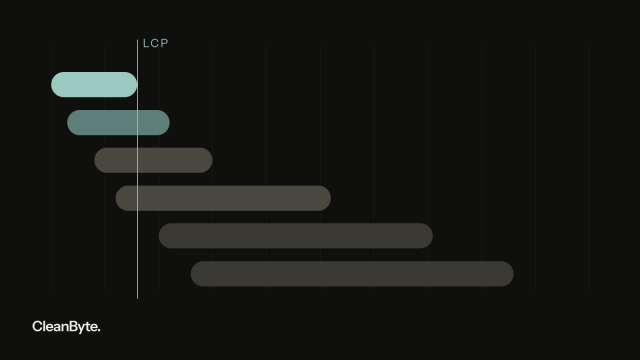
Speed is no longer a job for the developer at the end of a project. Since Interaction to Next Paint became a Core Web Vital in 2024, how quickly a page responds to a click counts as well, and that is largely determined by design choices: a background video, scroll animations, a slider with five photos. Good designers therefore work with a performance budget and ask of every element what it costs and what it delivers.
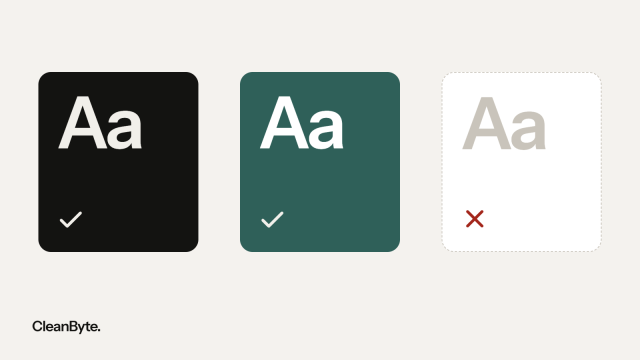
The same goes for accessibility. The European Accessibility Act has applied since 28 June 2025, and for companies that sell online to consumers WCAG 2.2 AA is no longer optional. For business-to-business sites it is a sound quality standard too. Much of it is decided in the design: sufficient contrast, a visible focus style for keyboard users, click targets of at least 24 by 24 pixels and information that is not conveyed by colour alone. Adding those afterwards costs more than including them from the start.
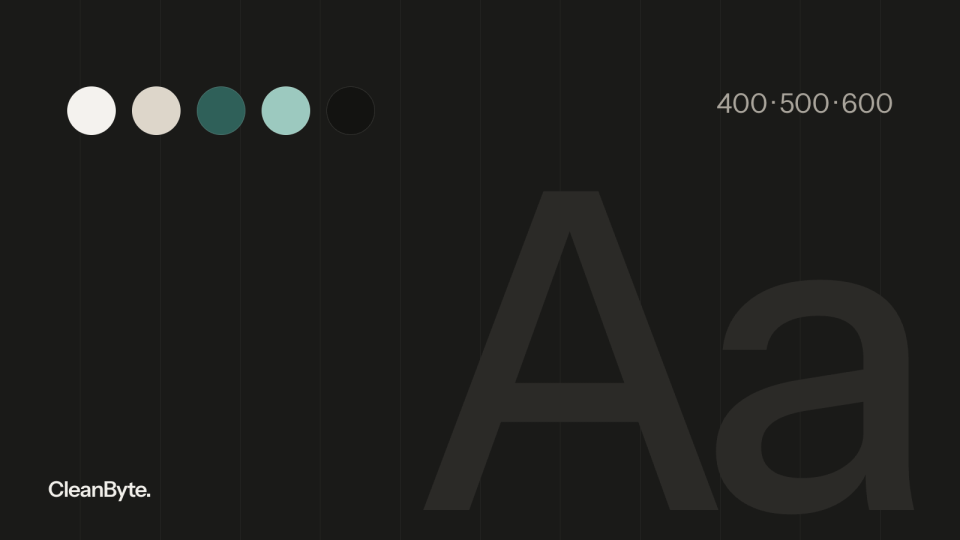
You can see the same sobriety visually: calmer designs with larger typography, more white space and less decoration. Variable fonts deliver every weight in a single file, and components that adapt to the space they sit in, rather than only to the screen width, make a design more robust on phones, tablets and large screens. This is not just fashion: it loads faster and reads better.
Search is changing: write for questions, not for tricks
Search engines more often show an AI-generated summary above the results, and many people put their question directly to an AI assistant. For simple informational queries, that can mean fewer visitors. For business decisions, such as choosing a supplier, people still click through to sources they trust. So the question is: is your website one of those sources?
What helps is not spectacular. Pages that cover one topic thoroughly and answer real customer questions. Clear company details: who you are, where you are based and what exactly you do. Current information with a date. Structured data that matches what is on the page, for your organisation, articles and breadcrumbs. Do not expect extra search features from FAQ markup, though: since 2023, Google only shows those for authoritative government and health websites.
Do you have premises that clients visit, or do you work in a clearly defined region? Then a complete, up-to-date Google Business Profile matters at least as much as the website itself. Make sure your name, address, phone number and opening hours are identical everywhere, and create a separate page with real content for each service or region instead of dozens of near-identical location pages.
Be careful with mass-produced text. Hundreds of similar pages written by AI to rank for search terms fall under Google's spam policy on scaled content abuse. A handful of thorough articles does more than a hundred thin ones.
Showing trust instead of claiming it
Business buyers check before they get in touch. They want to see who is behind a website, who you have worked for and how you work. Generic promises and stock photos of smiling people in a meeting room do not help; concrete, verifiable information does. That may be the most important shift in business web design: from making an impression to providing evidence.
- Real images of your work, your products or your premises instead of stock photography.
- Project descriptions covering the question, the approach and what was delivered, without figures you cannot back up.
- A clear process: what happens after an enquiry, and how long does it take?
- Full company details in the footer, such as your registration and VAT numbers, and in Germany a complete Impressum.
- A recognisable contact route on every page, with a short form that only asks for what you really need.
Trust continues after the first contact. A clear confirmation after a form is submitted, a realistic response time that you actually meet and a reply from a recognisable person rather than an anonymous address do more for your credibility than any design element.
Multilingual and privacy-friendly across borders
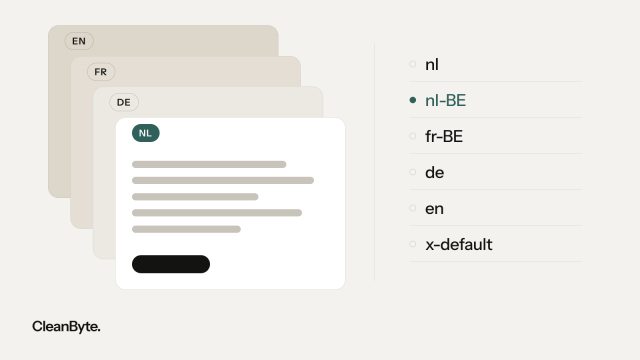
Many European companies serve clients in neighbouring countries. A second or third language is then not a luxury, but it has to be done properly: a separate URL per language, hreflang annotations so search engines show the right version (for example nl, nl-BE, de and en), and translations by people who know the market. Flemish readers are used to different words than Dutch readers, and German business clients expect the formal Sie and an Impressum with full company details. Unchecked machine translation stands out, and not in a good way.
Measurement is changing too. A cookie banner must give visitors a real choice; data protection authorities across the EU expect rejecting to be as easy as accepting. If you use Google Ads, you have needed Consent Mode v2 in the EEA since March 2024 to keep measuring conversions. An alternative is analytics that works without tracking cookies and keeps data in the EU, combined with self-hosted fonts.
What to take with a pinch of salt
- Chatbots as a replacement for a contact route. An assistant that answers frequently asked questions can be useful, but a visitor who wants to talk to you should not have to get past a bot first.
- Heavy scroll animations and 3D effects. They cost loading time and responsiveness and can bother visitors who are sensitive to motion; at the very least, respect the system setting for reduced motion.
- Accessibility overlays. A widget does not make an inaccessible site accessible.
- A complete redesign every few years. A well-built design system with fixed components allows gradual improvement, without starting from scratch each time.
Trends are a means, not an end. The best investment in 2026 is a website that loads quickly, works for everyone and clearly shows who you are and what you do. That sounds less exciting than the latest effect, but it is what convinces visitors to get in touch.
Last updated